Mineral fertilizer plants often add a fertilizer rotary dryer when phosphate rock, limestone, dolomite, or potassium feldspar carry excess moisture after granulation. This equipment removes water with hot air and helps granules reach the moisture level that storage and packaging require. You can connect the dryer to a ball mill, a pan granulator, and screening equipment in one fertilizer manufacturing system. When you select a fertilizer rotary dryer, you evaluate heat source, drum size, and material retention time.
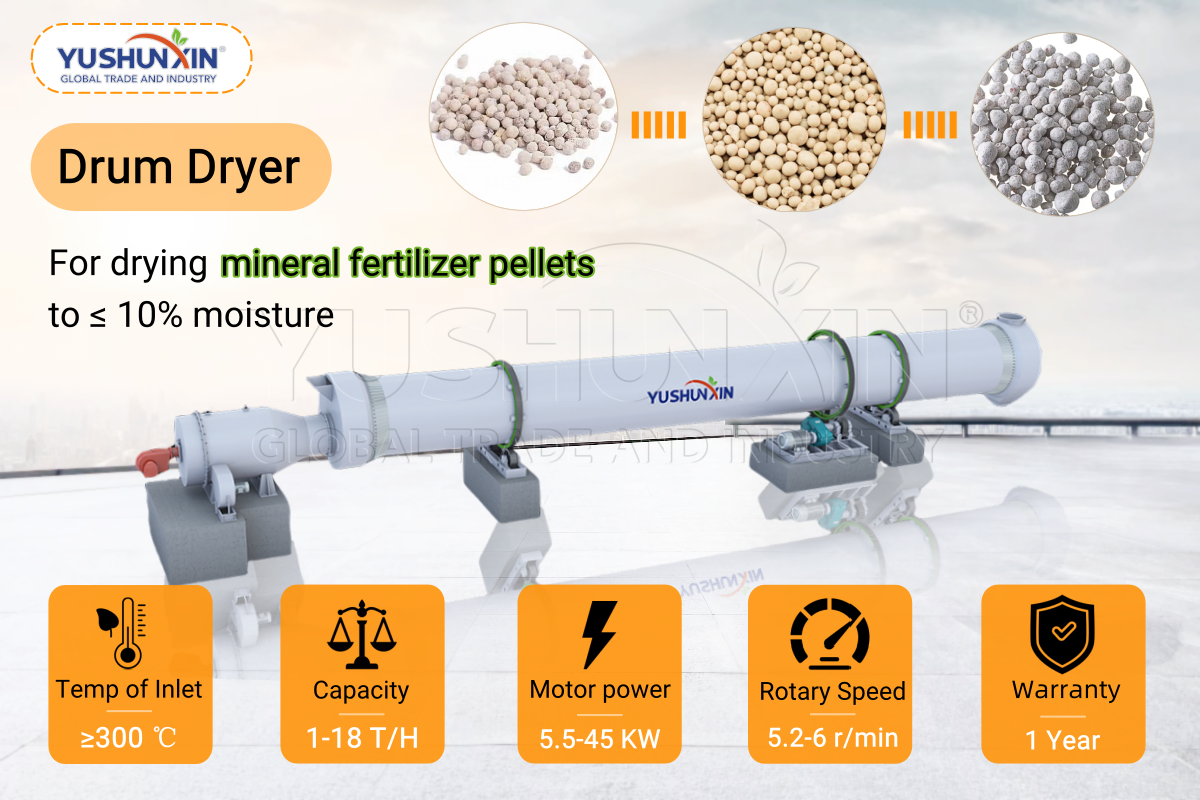
fertilizer rotary dryer
Which heat source fits a fertilizer rotary dryer system for mineral granule drying?
A fertilizer rotary dryer system works with several heat sources. A natural gas burner gives clean combustion and stable temperature, while a hot blast furnace accepts coal, biomass, or electricity. Your mineral fertilizer processing plant can choose the heat source that matches local fuel supply and environmental rules. The hot air enters the drum and contacts the tumbling granules, so phosphate rock or limestone loses moisture evenly. This arrangement supports a steady fertilizer manufacturing process and helps you avoid wet clumps during storage.
How does a fertilizer rotary dryer line handle phosphate rock and limestone moisture?
A fertilizer rotary dryer line handles mineral granules through direct heat exchange. Wet material enters the rotating drum, rises with the flights, and falls through the hot air stream. You can set drum speed, air flow, and temperature for dolomite or potassium feldspar according to the final moisture target. Mineral fertilizer granulation technology then connects drying with a pan granulator and screening equipment, so the granules stay uniform. This sequence improves flow and protects the fertilizer machinery from excessive wear.
What fertilizer production investment factors should you review for a mineral fertilizer rotary dryer line?
Before plant construction, you can review capacity, fuel type, dust collection, and control system as fertilizer production investment factors. A larger drum suits continuous fertilizer manufacturing, while a smaller unit fits a compact mineral fertilizer workshop. You may also compare the general definitions for mineral fertilizer to confirm your product category and drying requirement. A ball mill and a pan granulator can share the same layout with the dryer to form a complete fertilizer granulation line. This planning reduces transfer steps and keeps production costs predictable.
How does a fertilizer rotary dryer line improve mineral fertilizer granulation for storage and transport?
A fertilizer rotary dryer line improves mineral fertilizer granulation because dry granules resist clumping and keep their shape during storage and transport. You can treat phosphate rock, limestone, dolomite, and potassium feldspar to a stable final moisture level before the material enters the packaging stage. The rotating drum spreads the granules through the hot air stream, which removes surface water and reduces dust loss. This step supports the wider fertilizer granulation line and helps your mineral fertilizer processing plant meet handling requirements. You can then store the finished product longer and move it through conveyors with less breakage.
To summarize, a fertilizer rotary dryer strengthens mineral fertilizer processing when the heat source matches the granule type and plant scale. You can combine the dryer with granulation, screening, and packaging equipment in a complete fertilizer manufacturing system. A mineral fertilizer equipment manufacturer can help you configure the rotary drum and supporting units. Yushunxin supplies this drying equipment for mineral fertilizer producers. If you have interests, you can learn more about https://www.mineralfertilizerproductionsolutions.com/product/fertilizer-dryer